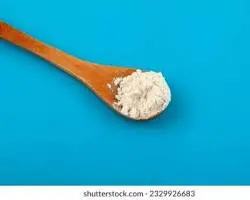
While the world talks about lithium and oil, India quietly holds a monopoly on another strategic resource: Guar Gum. India produces nearly 80-85% of the world's Guar, making it the undisputed king of this market.1
What makes Guar Gum unique is its dual personality. In the morning, it thickens your ice cream and yogurt (Food Grade). By afternoon, it is pumped thousands of feet underground to fracture rocks and extract shale gas (Industrial Grade).2
In 2025, the market is stabilizing after years of volatility.3 With crude oil prices holding steady and the "Clean Label" food movement growing in Europe, the demand for Indian Guar is rising again.4
This guide covers the latest market data, HS codes, and the compliance roadmap you need to export successfully.
1. Market Intelligence: The Numbers (2025 Outlook)
Global Dominance: India exports over $411 Million (approx.5 ₹3,400 Crores) worth of Guar Gum annually.
Price Trend (2025): Prices have stabilized around $1.50 - $2.50 per kg (FOB), depending on viscosity (cps).6
Top Importers:
USA: The largest buyer (consuming ~25-30% of exports).7 It drives the Industrial Grade market for hydraulic fracturing ("fracking").8

Germany: The hub for Food Grade imports (used in bakery/dairy).
Russia: A rapidly growing market for oil drilling applications.
China: Increasing demand for textile printing and food processing.9
Key Trend: There is a massive shift towards Certified Organic Guar Gum in Europe. Buyers now ask for "Sustainably Sourced" certificates, tracing the gum back to farmers in Rajasthan.
2. The Product: Grades & HS Codes
Guar Gum is not "one size fits all." You must classify it by its Viscosity (measured in CPS) and End-Use.
| Product Category | HS Code | Description & Use Case | Target Market |
| Food Grade | 1302 32 30 | High Viscosity (3500-7000 CPS). Light color, odorless. Used as a thickener in ice cream, sauces, gluten-free bread. | Europe, USA, Japan |
| Industrial Grade | 1302 32 90 | Fast Hydration (FH) Guar. Darker color allowed. Used in Oil Drilling, Mining, and Explosives. | USA (Texas), Russia, Saudi Arabia |
| Guar Splits | 1302 32 20 | The raw, split seed. Often exported to countries that have their own grinding mills (like China). | China, Brazil |
Viscosity is Money:
A standard 3500 CPS powder might sell for $1.60/kg.
A premium 6000+ CPS Food Grade powder can fetch $2.50+/kg.
3. Regulatory Compliance: The "Quality" Barrier
Exporting agricultural powder is risky because of "Contamination" fears.
1. Mandatory Registrations:
APEDA: You must be registered with APEDA (Agricultural and Processed Food Products Export Development Authority).
SHEFEXIL: For industrial grade exports, registration with the Shellac & Forest Products Export Promotion Council is often required.
2. Food Safety Certifications (Crucial for Europe/USA):
FSSC 22000 / BRC: Major buyers like Nestlé or Danone will not touch your product without this.
Kosher & Halal: Mandatory for food ingredients. It certifies the gum is free from animal by-products.
Organic Certificate (NPOP/NOP): If you claim "Organic," you need transaction certificates verifying the farm source.
3. The "PCP" Check:
Europe has strict limits on Pentachlorophenol (PCP) and Dioxins. Your lab report must explicitly state that PCP is below 0.01 mg/kg.
4. Buyer Landscape: Who Imports?
You are selling to two very different worlds.
A. The "Fracking" Giants (USA/Russia)
Use Case: They mix Guar powder with water and sand to blast open shale rocks (Fracking Fluid).10
Buyers: Service companies like Halliburton, Schlumberger, or their direct chemical procurement agents.
Requirement: They buy in massive volumes (100+ Tonnes) but demand Fast Hydration (FH) Guar that thickens in 3 minutes, not 2 hours.
B. The "Food" Giants (Europe)
Use Case: Stabilizer (E412) in soups, ice creams, and ketchup.11
Buyers: Ingredient distributors like Cargill, Ingredion, or Tate & Lyle.12
Requirement: Zero bacterial load (Salmonella/E.Coli free) and pure white color.
5. Logistics & Packaging
Packaging:
Food Grade: 25kg Multi-wall Paper Bags with inner poly liner (to keep moisture out).13
Industrial Grade: 1 Ton (1000kg) Jumbo Bags (FIBC) for easy handling at drilling sites.
The "Moisture" Enemy:
Guar Gum is hydrophilic (loves water). If the container has high humidity, the powder will turn into a solid brick.
Tip: Always use "Desiccants" (Silica Gel) in the container and ensure the floor is lined with craft paper.
6. Action Plan for Exporters
Don't Compete on "Standard": The market for generic 3500 CPS guar is crowded. Focus on 5000+ CPS Food Grade or Fast Hydration Diesel Slurry guar where margins are higher.
Target Non-US Markets: The US market is mature. Look at Russia and Norway for oil/gas demand, and Germany/Italy for the gluten-free food boom.
Secure the Source: Visit Jodhpur or Bikaner (Rajasthan).14 Build a relationship with a mill. You cannot trade guar effectively if you don't understand the raw seed price fluctuations (which happen daily at the NCDEX exchange)