India's pharmaceutical sector doesn't just export $30.47 billion worth of medicines; it has quietly built an engineering backbone that powers drug manufacturing across 100+ countries. In 2026, the global pharmaceutical machinery market has crossed $26.35 billion, and India is now the fastest-growing supplier globally, expanding at an 8% CAGR.
As global drug makers shift from expensive European machinery to high-quality, cost-effective Asian alternatives, Indian equipment manufacturers are filling the void with GMP-compliant, automated production lines.
1. Market Intelligence: The 2026 Export Landscape
Indian pharmaceutical machinery is highly sought after because it offers the "sweet spot" of European-grade stainless steel construction (SS 316L) combined with competitive Asian pricing.
The Primary Drivers: The global surge in generic drug manufacturing and the rising demand for Active Pharmaceutical Ingredients (APIs) are forcing mid-tier pharmaceutical companies in Africa, the Middle East, and Latin America to rapidly scale their infrastructure.
The "China-Plus-One" Shift: Global buyers are increasingly sourcing complex processing machines (like fluid bed dryers and high-shear granulators) from India to diversify their capital equipment supply chains away from China.
Technology Shift: Fully automatic machinery now accounts for 57.3% of the global market. Hand-operated or semi-automatic machines are rapidly becoming obsolete in export markets due to data integrity regulations.
2. Top Export Categories & HS Codes
If you are exporting machinery, incorrect HS codes can delay your shipment and void your export incentives (like RoDTEP). Here are the primary machinery categories dominating Indian exports:
| Machinery Category | Standard HS Code | Global Market Share | Export Insight (2026) |
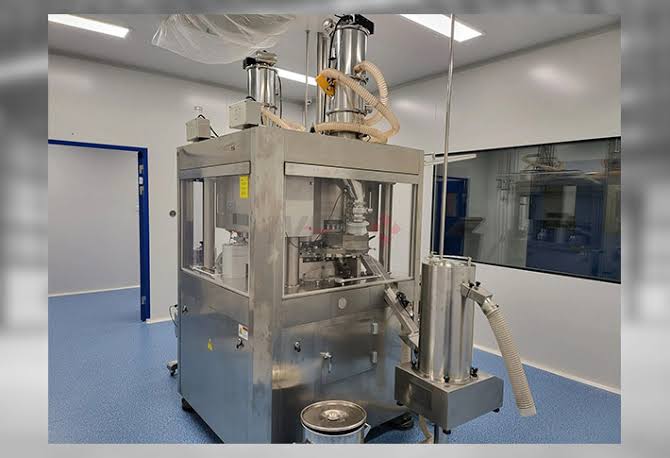
| Solid Dosage (Tablet Press) | 8479 89 70 | High | The most exported item. Indian rotary tablet presses are renowned for high output and rugged durability. |
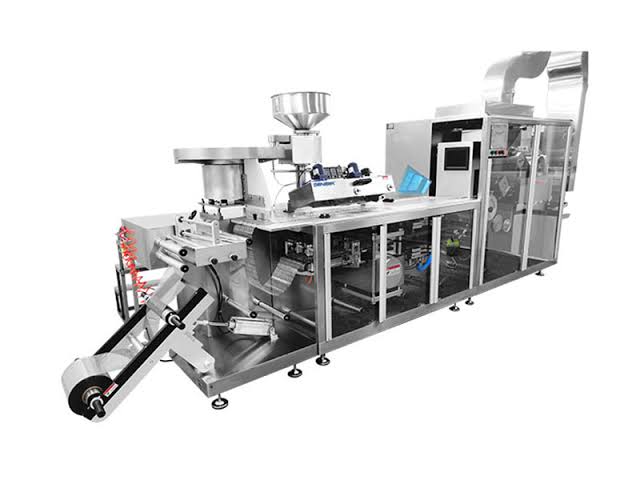
| Blister Packing Lines | 8422 40 00 | ~32.5% (Packaging) | High demand for Alu-Alu and PVC-Alu blister machines with camera inspection systems. |
| Processing (Granulation/Mixing) | 8479 82 00 | ~34.2% (Processing) | Includes Rapid Mixer Granulators (RMG) and V-Blenders. Essential for generic medicine plants. |
| Liquid Filling & Capping | 8422 30 00 | Medium | Surging demand in Africa and Southeast Asia for automated syrup and IV fluid filling lines. |
| Sterilization & Heat Treatment | 8419 89 90 | High Value | Autoclaves, dry heat sterilizers, and lyophilizers (freeze dryers) required for injectables and biologics. |
3. The Top Export Destinations: Where to Sell?
1. Your target market dictates the level of certification your machinery must possess.Semi-Regulated Markets (Africa, LATAM, Southeast Asia):
Countries like Kenya, Nigeria, Vietnam, and Brazil are aggressively setting up domestic pharmaceutical plants to reduce their reliance on imported medicines. These buyers prioritize turnkey solutions (buying an entire plant setup from one supplier) and competitive pricing.
The Middle East (UAE, Saudi Arabia):
Heavy government investments in regional healthcare security mean high demand for advanced API processing equipment and sterile fill-finish lines.
Regulated Markets (USA & Europe):
Indian manufacturers are now breaking into the West, not by selling core processing machines, but by exporting high-quality ancillary equipment (IBC bins, dust extractors, washing equipment, and material handling systems).
4. Mandatory Export Compliance & "The Paperwork"
Selling pharmaceutical machinery is fundamentally different from selling standard industrial equipment. Buyers are not just paying for the steel; they are paying for the validation documentation. If a machine cannot be validated by their local health authority (like the USFDA or EMA), it is useless to them.
CE Marking: Mandatory for shipping any machinery to the European Union. It proves the equipment meets EU safety, health, and environmental protection requirements.
21 CFR Part 11 Compliance: If your machine has a touchscreen HMI (Human-Machine Interface) or software, it must comply with this FDA rule governing electronic records, audit trails, and data integrity.
The Qualification Dossier (FAT to PQ): You must supply an airtight documentation package:
FAT (Factory Acceptance Test): Conducted in India before shipping.
SAT (Site Acceptance Test): Conducted at the buyer's facility.
DQ/IQ/OQ/PQ: Design, Installation, Operational, and Performance Qualification documents. Without these, the buyer cannot legally produce drugs on your machine.
Material Certificates: You must provide mill test certificates proving that all contact parts are strictly SS 316L (Stainless Steel) and non-contact parts are SS 304.
5. The Manufacturing Hubs of India
If you are a merchant exporter looking to source pharmaceutical machinery, you must look at specific industrial clusters:
Ahmedabad & Vadodara (Gujarat): The undisputed capital of pharmaceutical machinery in India. Home to hundreds of MSMEs and large fabricators producing everything from tablet presses to complete liquid oral manufacturing plants.
Mumbai / Vasai / Pune (Maharashtra): Known for high-end precision equipment, analytical testing instruments (dissolution/friability testers), and advanced packaging lines.
Hyderabad (Telangana): Growing rapidly to support its massive local API and biologics manufacturing ecosystem.
6. Strategic Action Plan for 2026
To command higher export margins, you must adapt to Pharma 4.0.
Basic mechanical equipment is being commoditized. To win contracts against European giants like Bosch (Syntegon) or IMA, Indian exporters must integrate smart technologies. Add IoT sensors to your fluid bed dryers for predictive maintenance, or integrate vision inspection cameras on your blister packing lines. Furthermore, establish a network of local service engineers in your target countries; machinery downtime costs pharmaceutical companies thousands of dollars an hour, and strong after-sales support is the primary factor foreign buyers consider when selecting an Indian supplier.