In the hill town of Tirumala, Andhra Pradesh, faith fuels a unique global economy. Every day, over 50,000 to 100,000 devotees tonsure (shave) their heads as an offering to Lord Venkateswara. This act of humility generates 500+ tonnes of premium human hair annually, turning the Tirumala Tirupati Devasthanams (TTD) into one of the world's largest raw hair suppliers.
For the global beauty industry, this isn't just hair; it is "Black Gold." Indian "Temple Hair" is the most expensive and sought-after variety in the world due to its virgin quality (never chemically treated).
This guide details the journey of this hair from a devotee's head to a luxury wig in Hollywood, backed by the latest 2024-25 export data.
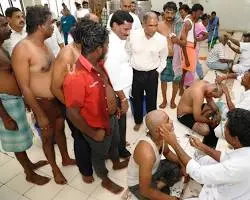
1. The Source: Why is Tirupati Hair So Valuable?
The value lies in the cuticle.
Remy Hair: In Tirupati, hair is shaved directly from the scalp in a single cut. The cuticles (outer layer of the hair shaft) remain aligned in one direction. This prevents tangling and keeps the hair soft and shiny for years.
Non-Remy Hair: Hair collected from salon floors or combs (comb waste) has mixed cuticles. This is cheaper and requires acid baths to smooth out.
The Volume: TTD collects roughly 1,500 to 2,000 kg of hair daily.
2. The Logistics: Collection & E-Auction
Once tonsured at the Kalyanakatta (tonsuring center), the hair doesn't go directly to exporters. It goes through a rigorous internal process.
Step 1: Segregation (The 5 Grades) TTD workers manually sort the hair based on length and color.
Grade 1 (27 inches+): The "Diamond" category. Longest, rarest, and most expensive.
Grade 2 (19-26 inches): High demand for extensions.
Grade 3 (10-18 inches): Standard wig making.
Grade 4 (5-9 inches): Used for shorter wigs/patches.
Grade 5 (Grey/White Hair): Dyed later for use.
Step 2: The E-Auction TTD does not sell hair retail. It conducts E-Auctions (managed by MSTC Ltd.) where authorized exporters bid for tonnes of stock.
Revenue Data: In FY 2023-24, TTD earned approx ₹150 - ₹200 Crores solely from hair auctions.
3. The Processing Hub: Guntur & Eluru
Once the auction is won, the hair moves to the processing districts of Andhra Pradesh: Guntur, Eluru, and Vijayawada. This region is the "Hair Capital of India."
What Happens Here?
Washing & Fumigation: To remove dirt and oil.
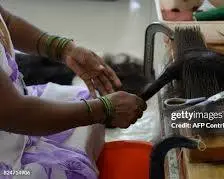
Hackle (Carding): Workers pull hair through metal spikes to remove short strands and align cuticles perfectly.
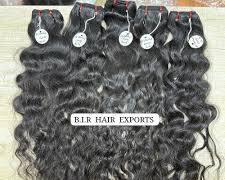
Wefting: Sewing hair into bundles (wefts) ready for installation.
Tip: If you visit Guntur, you will see thousands of drying racks on rooftops—this is export hair being sun-dried.

4. Export Data & Regulations (2025 Update)
This is the most critical section for exporters. The rules have changed.
The "Raw Hair" Ban (February 2025 Policy Change): To stop China from buying cheap raw hair and selling expensive wigs back to the world, the DGFT (Directorate General of Foreign Trade) changed the policy.
Old Rule: Raw hair export was 'Restricted'.
New Rule (2025): Export of Raw Human Hair (HS Code 05010010) is PROHIBITED unless the FOB (Free on Board) value is $65 per kg or above.
Impact: You can no longer export cheap, unprocessed hair scrap. You must add value (clean, sort, or weft it) to raise its value above $65/kg to export legally.
Top Export Markets (2024-25):
China: Still the largest buyer (38% share), but buying higher grades due to new rules.
USA: Largest buyer of finished products (extensions/wigs).
Europe (Italy/UK): High demand for Grade 1 "Virgin Remy" hair for luxury salons.
Myanmar/Vietnam: Emerging processing hubs that buy Indian hair, process it, and re-export to the US.
5. Buyer List: Who Buys Indian Hair?
If you are entering this business, these are your target buyer categories.
A. The "Processing Giants" (China/Myanmar)
Juancheng Xinda Hair Products (China): Large scale wig manufacturers.
Henan Rebecca Hair Products (China): One of the world's largest hair companies.
Strategy: They buy bulk auctioned hair to process in their own factories.
B. The "Luxury Brands" (USA/Europe)
Great Lengths (Italy): The Rolls Royce of hair extensions. They exclusively market "Indian Temple Hair."
Bellami Hair (USA): Massive influencer-driven brand.
Beauty Works (UK): Major supplier to salons.
Strategy: They need finished, wefted, and packaged hair. They will ask for "Single Donor" certification.
C. The "Raw Hair" Enthusiasts (Direct to Consumer)
Indique Hair (USA/India): Sells premium pure Indian hair directly to women.
Mayvenn (USA): Network of stylists selling hair.
6. How to Start: A Checklist
Get Your License: You need an IEC Code and registration with the PLEXCONCIL (Plastics Export Promotion Council) or HEPC (Handloom Export Promotion Council) depending on the finish.
Sourcing: You cannot buy from Tirupati directly unless you have huge capital (crores) for auctions. Start by buying from "Aggregators" in Guntur/Eluru who win the auctions and sell smaller lots.
Compliance: Ensure your shipment meets the $65/kg Minimum Export Price (MEP) criteria. If you under-invoice to bypass this, Customs will seize your cargo.
Fumigation: Mandatory. Hair is organic material; US/EU Customs will reject it without a Phytosanitary Certificate proving it is lice/pest-free.